.png)
photographer: Andrea Veneri
Thursday 4 December 2025
18:00 - 21:00
Other Forms of Sensing - Elegies for 120 Years of Villa Romana
Casa di Goethe
Via del Corso 18, Rome
Programme
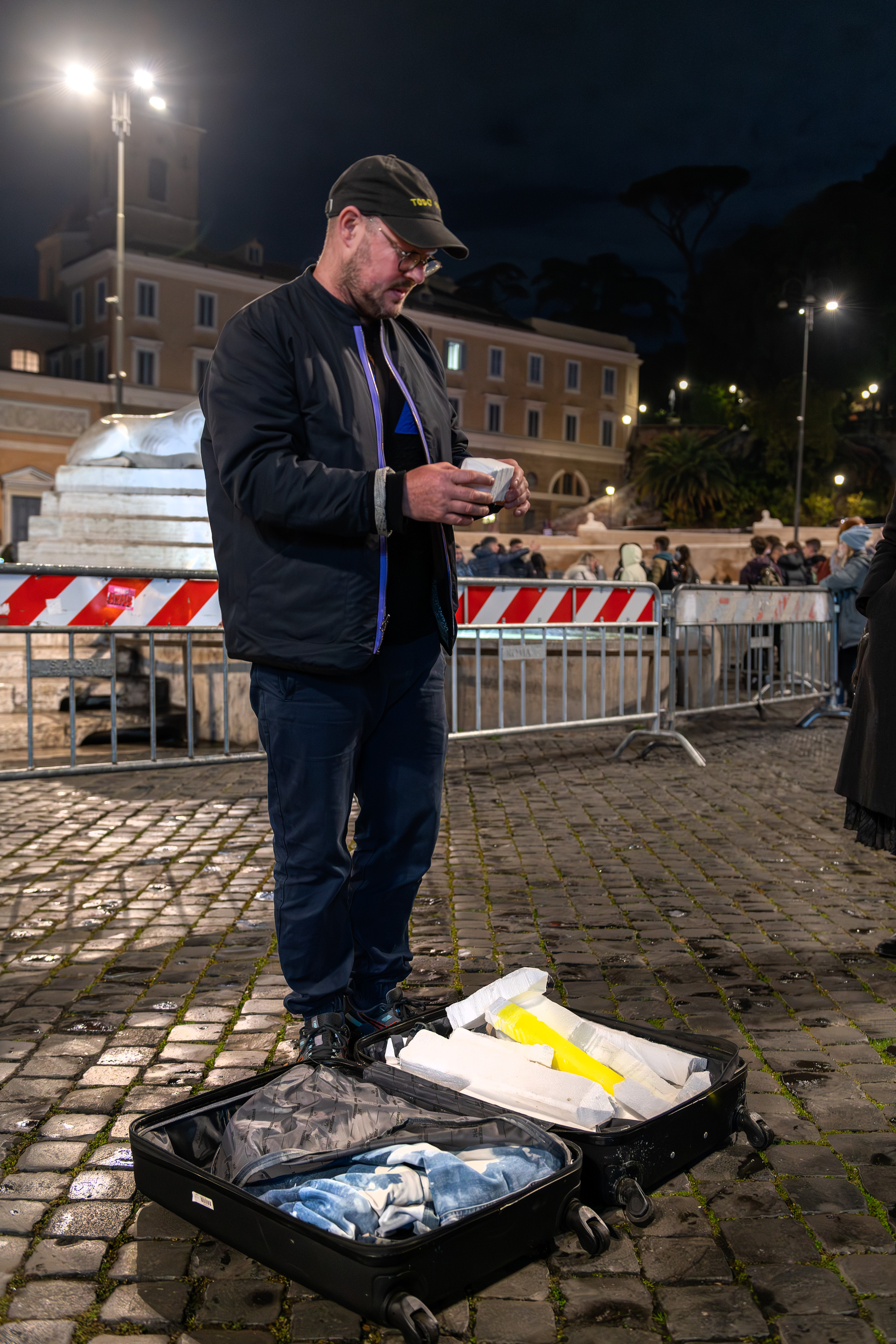
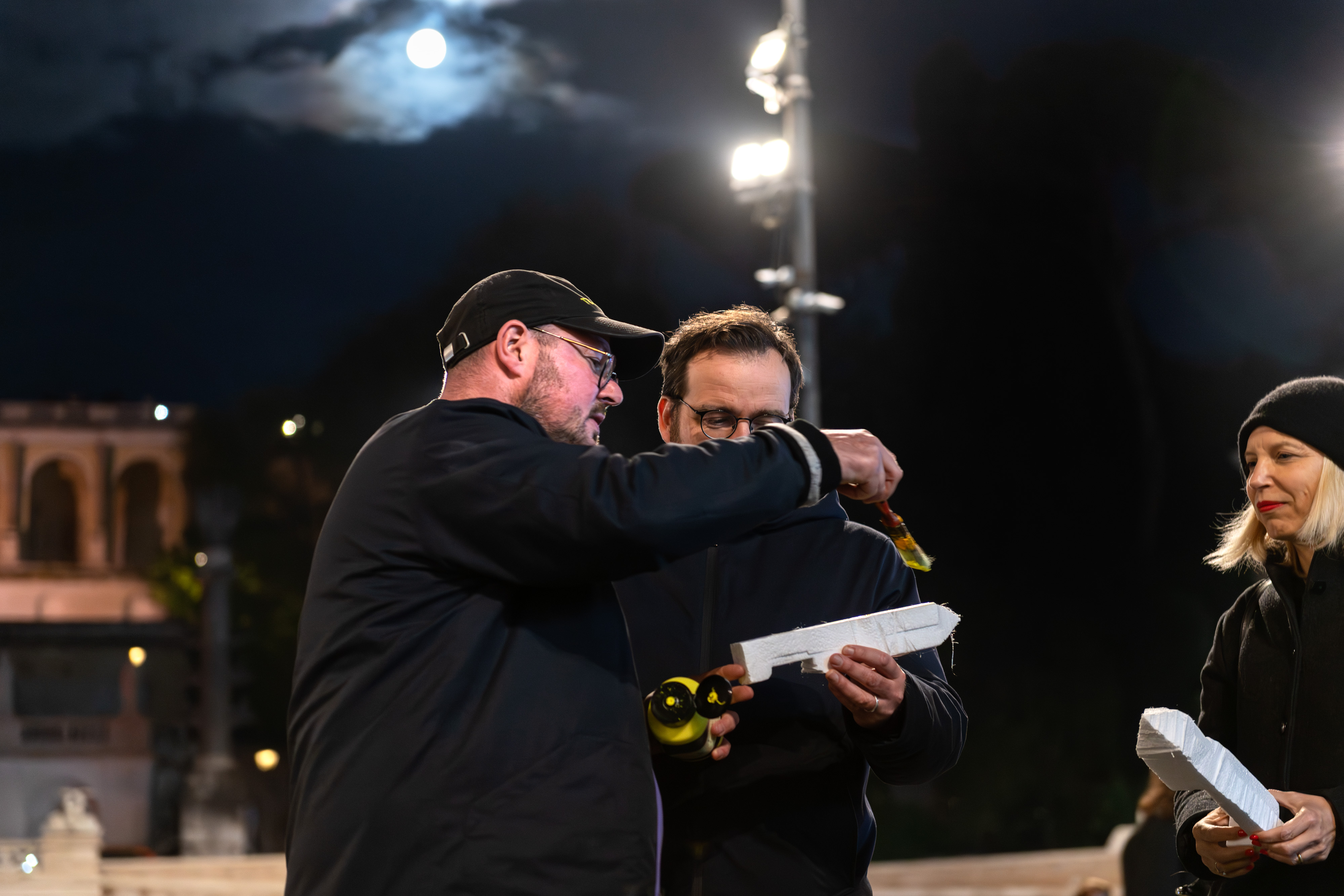
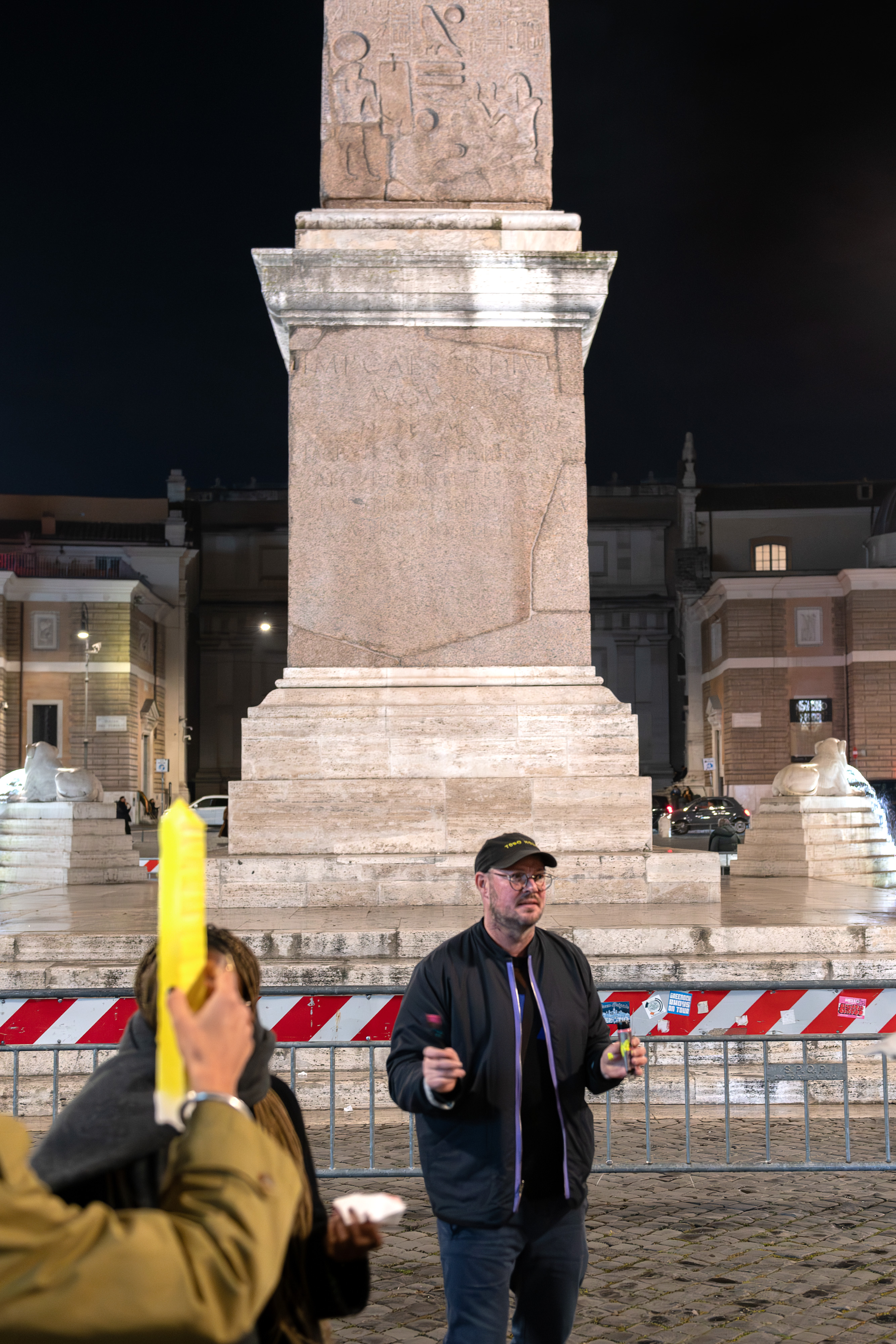
6:00 p.m. – Walking Performance by Raul Walch
From Piazza del Popolo to the Casa di Goethe
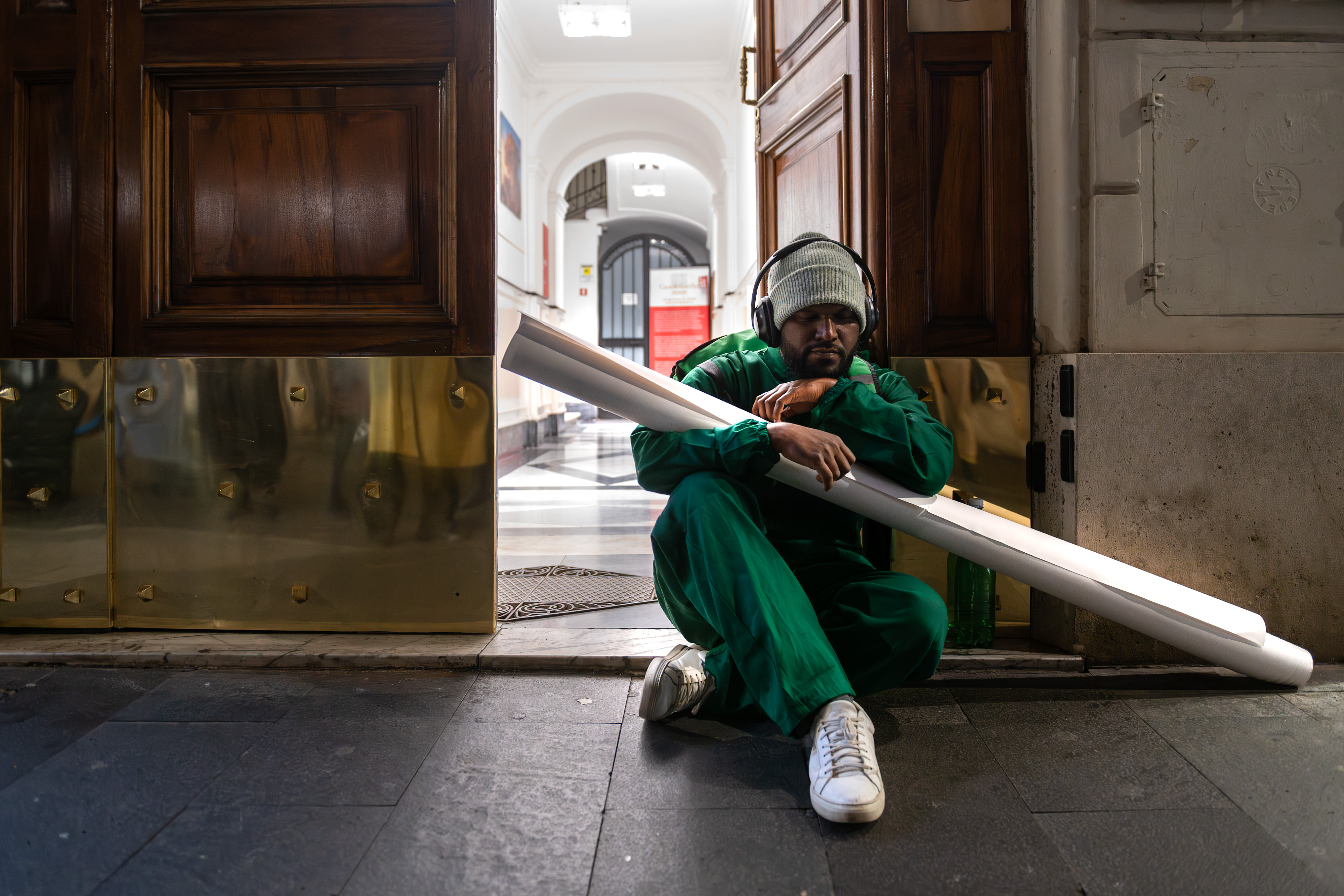
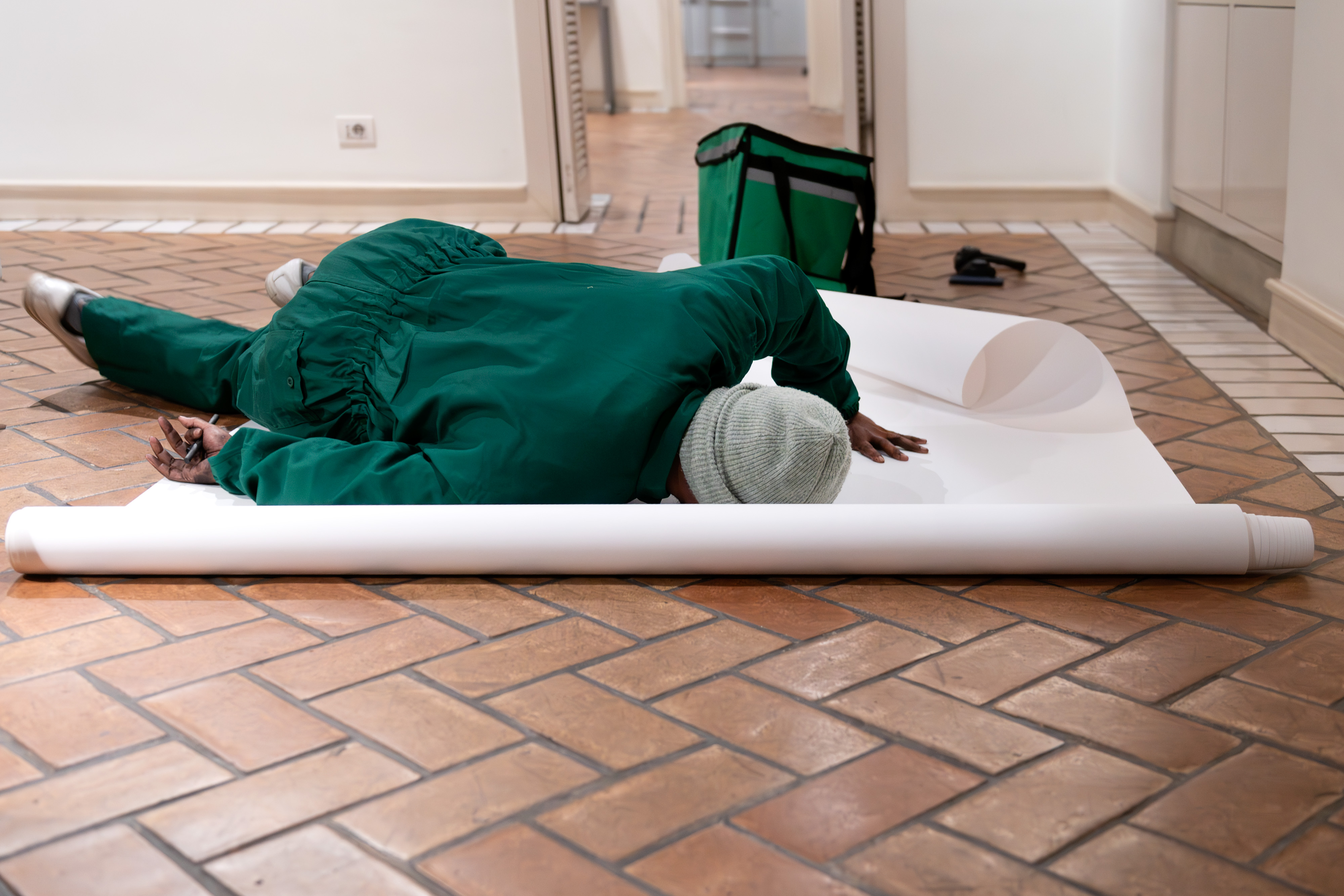
6:20 p.m. – Performance by Sajan Mani
Casa di Goethe, Museum (1st floor)
6:40 p.m. – Performance by Chaveli Sifre
Casa di Goethe, Library (2nd floor)
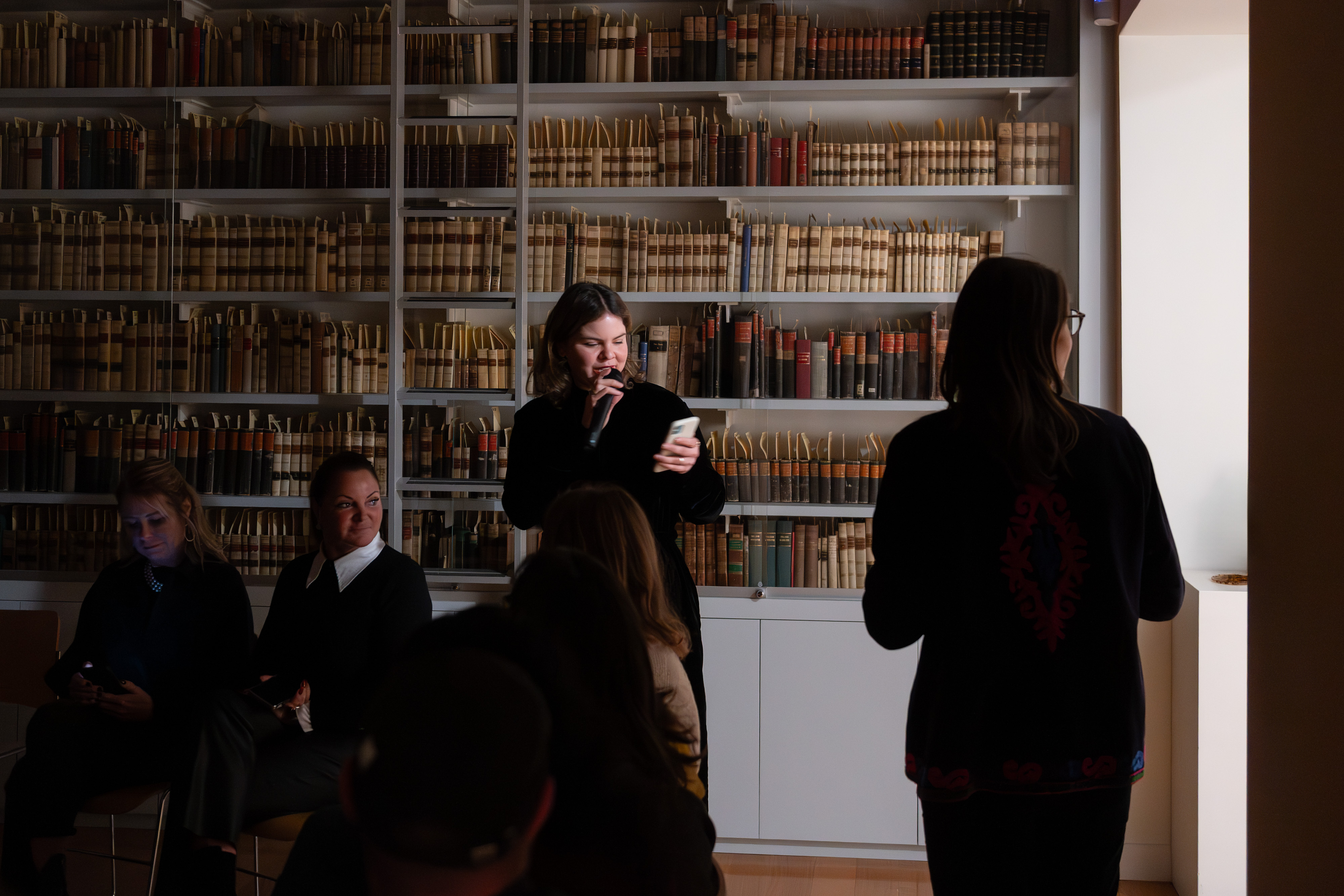
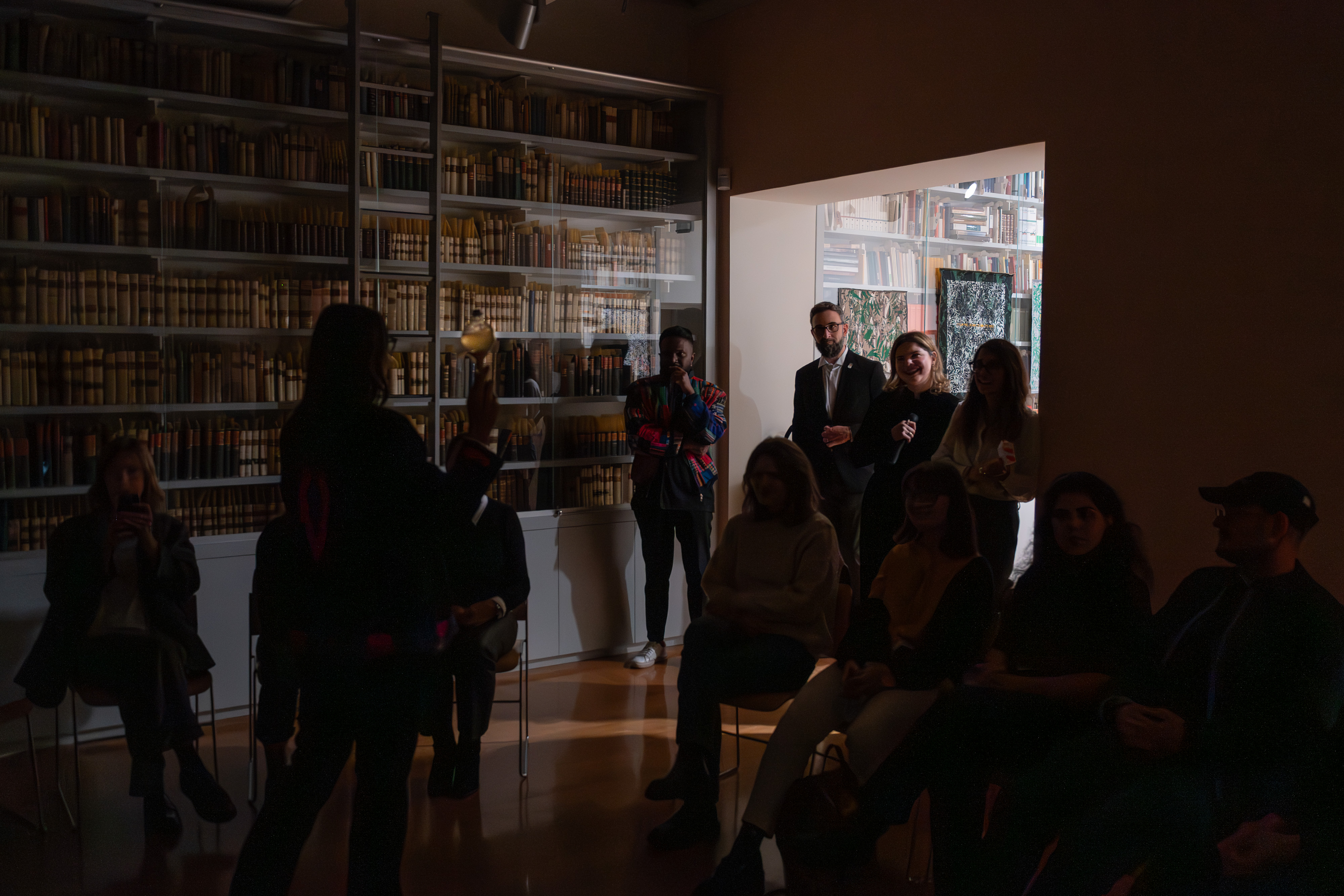
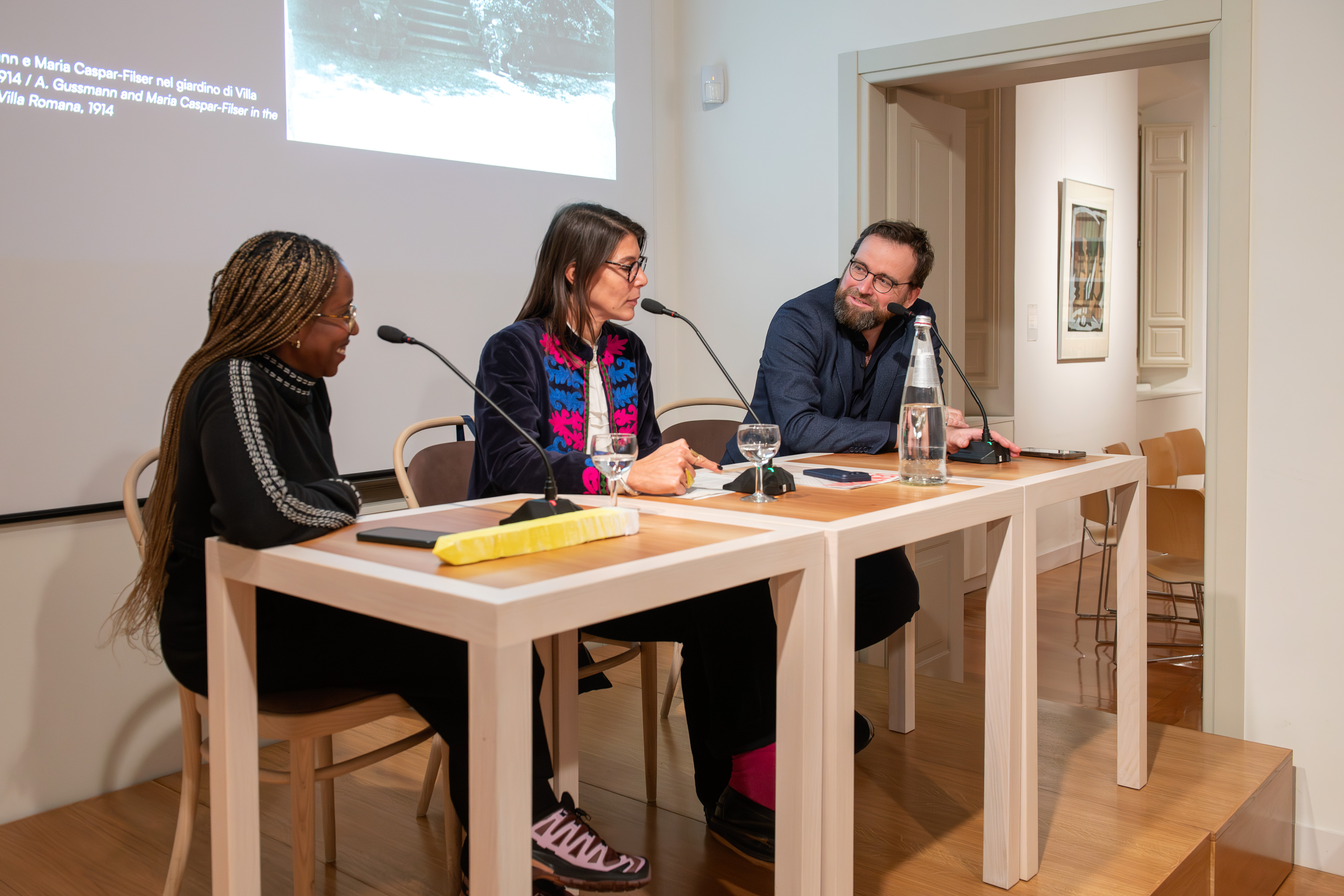
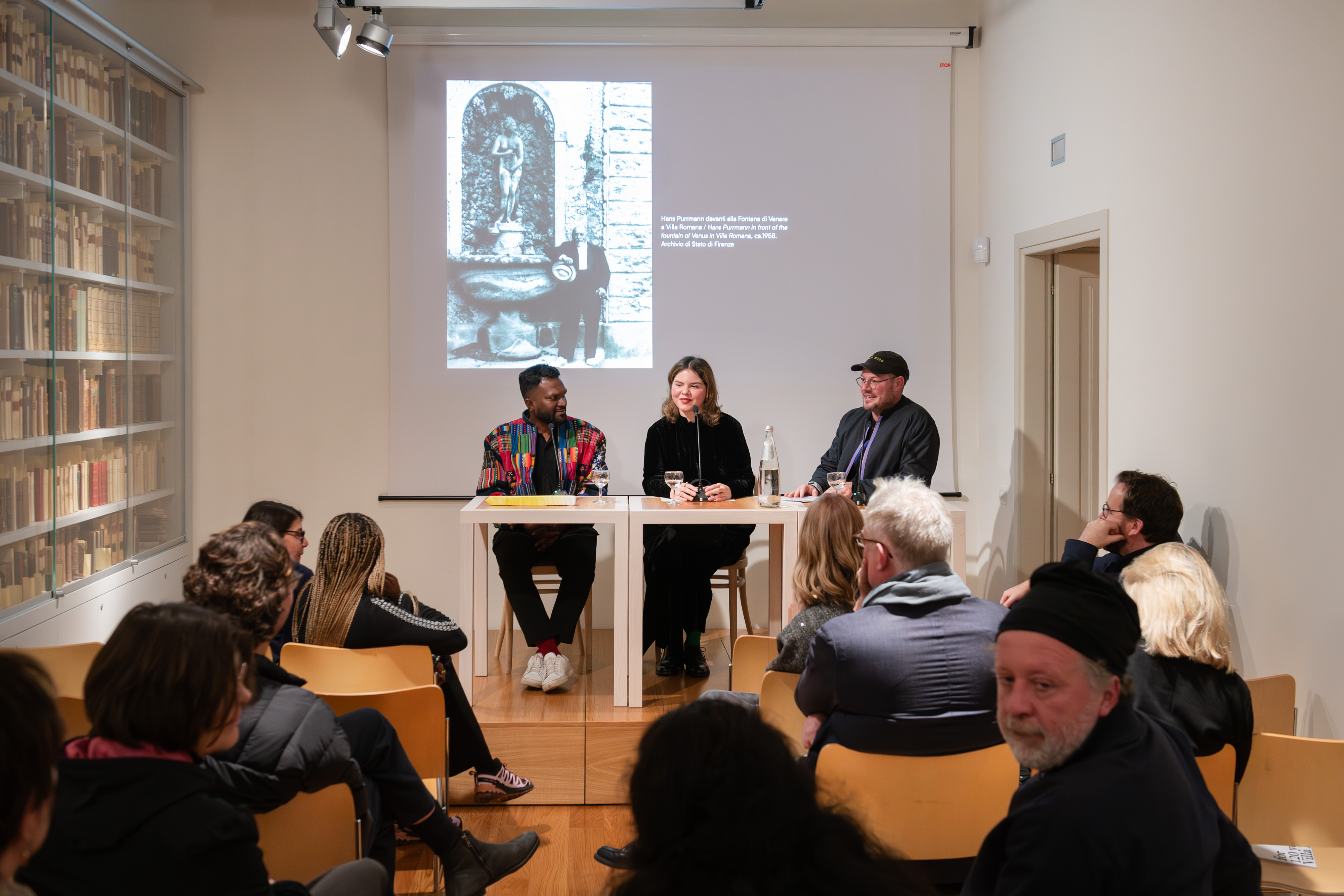
7:00 p.m. – Discussion on the history and presence of Villa Romana with Elena Agudio (Director, Villa Romana) and Mistura Allison (Curator and Project Coordinator, Villa Romana). Moderated by Gregor H. Lersch (Director, Casa di Goethe)
6:00 p.m – 8:00 p.m. – Presentations of works by Sajan Mani, Elia Nurvista, Chaveli Sifre, and Raul Walch. All exhibitions at the Casa di Goethe will be open.
Event in English. Free entrance.
Other Forms of Sensing invites audiences to encounter the 120-year history of Villa Romana not as a fixed chronology, but as a field of vibrations: echoes carried through bodies, gestures, atmospheres, and shifting modes of perception. Conceived as an elegy understood not as mourning but as heightened attention, the evening follows a notion already present in Goethe’s Römische Elegien, where elegy becomes a practice of intensified sensing - an attunement to place, memory, encounter, and desire rather than a lament for what has passed. In Goethe’s understanding, the elegiac mode opens a heightened present in which the city, its histories, and the bodies moving through it resonate with one another. In this spirit, the evening calls for a collective attunement to the murmurs, ruptures, and resonances that shape the life of an institution.The programme opens with Raul Walch’s walking performance Il Viaggiatore. Guiding participants from Piazza del Popolo to Casa di Goethe, the walk becomes a connective line between city, body, and archive. Walch’s movement evokes the many who have travelled between Florence and Rome over the decades, echoing Goethe’s own experience of sensing a place through wandering. To approach an institution, the performance suggests, one begins by walking toward it - allowing streets, air, and spontaneous encounters to inscribe themselves into the unfolding experience.Inside Casa di Goethe, Chaveli Sifre shifts the space into another sensory register with Tocando Luz (Touching Light). In a darkened room, bioluminescent maracas - held, shaken, touched - emit brief pulses of inner light. The performance plays with the divergence between tocar (to touch) and spielen/suonare (to play), proposing perception as a relational act born of contact. If Goethe sought to understand colour through attentive, embodied observation, Sifre refracts this gesture through Caribbean cosmologies, transforming the house into a living sensorium where light, scent, rhythm, and ritual intertwine.Sajan Mani’s Waiting for Goethe: delivered further grounds the evening in questions of language, migration, and the politics of presence. Entering as a delivery worker, he writes Malayalam alphabets and a letter addressed to Goethe, invoking entangled histories between Kerala and Germany shaped by missionary lexicons and contemporary labour routes. Waiting becomes both practice and critique, while writing becomes a method of inscribing himself - and the linguistic worlds he carries - into a house historically oriented toward a different imaginary.The evening also presents works by Elia Nurvista, including new pieces from The Texture, first shown this year at Villa Romana. Her materials - rooted in food, labour, extraction, and sustenance - anchor the programme in the tactile politics of everyday life. Through her work, sensing becomes not only atmospheric but material, embedded in the substances and economies that shape global entanglements.Other Forms of Sensing gathers these gestures into an elegy that listens as much as it speaks. It invites audiences to sense Villa Romana not through dates or documents, but through movement, touch, language, and matter. As in Goethe’s elegies, where the past becomes perceptible through the body’s encounter with place, the evening proposes that the life of an institution is measured not in years alone, but in the sensorial worlds it cultivates and the futures it dares to imagine.
The Villa Romana e.V. maintains the Villa Romana and the Villa Romana Prize.
The main sponsor is the Federal Government Commissioner for Culture and the Media.
Other sponsors are the Deutsche Bank Foundation, the BAO Foundation as well as - project related - numerous private individuals, companies and foundations from all over the world.
This project is also supported by: